Introducing New Staff Vol.98 : Tetsuro SUMIDA
2026/05/01
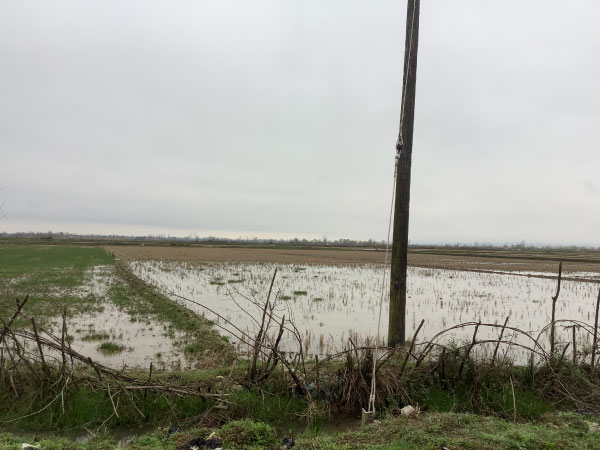
Pasīkhān, an otherwise unremarkable village in northern Iran, from which a self-proclaimed messiah once emerged…
SUMIDA Tetsuro
(JSPS Research Fellowship, April 2026)
It is difficult not to feel uneasy about how deeply apocalyptic thinking has permeated contemporary societies. Turning our attention to Iran between the medieval and early modern periods, it appears that the coming of the Last Day was accepted with striking seriousness. Such expectations of the end of time and the coming of the messiah can be seen in the rise of mystics who proclaimed themselves messiahs—figures whose teachings and followers would eventually help bring about the establishment of the Ṣafavid dynasty. The same expectations can also be seen in the efforts of court intellectuals serving existing regimes, who drew upon their own areas of expertise to demonstrate that their rulers, too, possessed messianic qualities.
In fact, the fifteenth century and the two centuries that followed witnessed a simultaneous rise of messianic expectations across Eurasia. Columbus, Savonarola, Nostradamus — alongside figures active in Anatolia, Iran, and India. This has led researchers to consider whether these parallel phenomena might be understood as one manifestation of the increasing interconnectedness of the early modern world. One scholar who raised this question stopped short of offering a definitive conclusion, but declared that “generalisations are too important to be left to generalists.” I take much the same position.
What I seek to reconstruct is the reasoning by which self-proclaimed messiahs in the Persianate world of this period fashioned their claims to messiahship. Drawing not only upon scriptural knowledge but also upon mystical thought and occult sciences—intellectual resources largely unfamiliar to us today, yet widely shared at the time—they crafted elaborate visions of messiahship and worked tirelessly to attract followers. Their own writings, together with commentaries composed by disciples who revered them as messiahs, constitute the core body of sources for my research. Much about these figures nevertheless remains obscure, while the vast majority of their writings still lie unpublished in manuscript libraries, dormant like untapped veins of gold awaiting future discovery.
I have always been drawn to the concreteness of historical studies. Some may regard mystical thought as the very height of abstraction. Yet I am convinced that few things are more concrete than doctrinal texts, for they preserve the thoughts of people from the past almost exactly as they once existed. I will never forget the shock I felt when, while reading a manuscript of a doctrinal treatise, I suddenly realized that the words of a self-proclaimed messiah living in the late fourteenth century seemed to flow directly into my mind across six centuries.
I sometimes think that scholars who work on doctrinal texts are granted a privilege somewhat different from that of historians who study chronicles and other historical records. The articles I write are more than mere academic studies; they also function, in a sense, as the latest commentaries on the original texts themselves. In that sense, I sometimes feel that I am engaged in the same task once undertaken by the disciples of these masters. Of course, my understanding remains far more limited than theirs. And that, perhaps, is a challenge worth pursuing.