Introducing New Staff Vol.97 : Shoko MORI
2026/04/22
As an Apprentice, As a Practitioner: Ethnographic Knowledge Emerging from Ghanaian Workshops
MORI, Shoko
(Research Associate, April 2026)
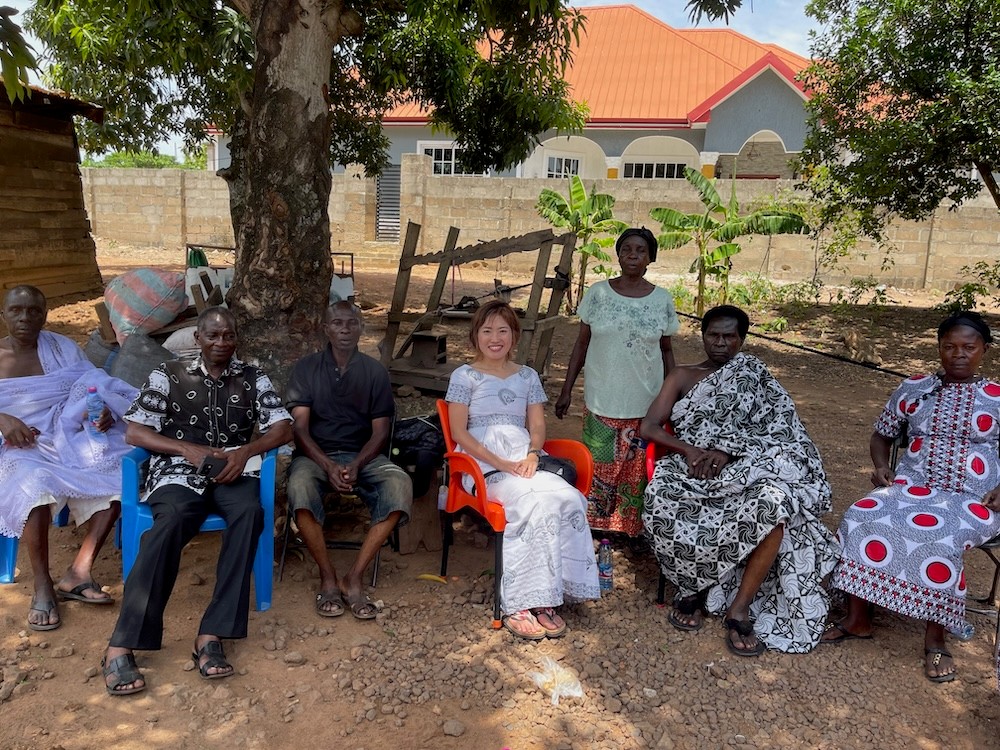
My journey as a fieldworker began in Chiraa, a rural village near the regional city of Sunyani in the Republic of Ghana. Serving as a community officer for the Japan Overseas Cooperation Volunteers (JOCV), I spent my days commuting to villages around forest reserves. Living alongside the Asante people and migrants from northern Ghana, sharing meals, and conversing in Twi and other local languages became the foundational experience of my fieldwork.
Later, through my involvement in the local artist community, I took on the role of a local coordinator for the Japan Foundation. This led to a life-changing encounter with “sign painting.” I was involved in a project with contemporary artist Tsuyoshi Ozawa, where I witnessed firsthand the creation of massive sign paintings, music video shoots behind workshops, and the recording of improvisational music. I was captivated by the craftsmanship unfolding in workshops along the highways—the vibrant, often eccentric fusion of imagery and text that delivered powerful social messages. This fascination became the catalyst for my academic career.
Before embarking on long-term fieldwork, I sought advice from my supervisor at that time, Professor Emeritus Hiroyuki Kurita of the Tokyo University of Foreign Studies. He suggested, “Why not become an apprentice and master every aspect of their knowledge and technique?” Having already lived in Ghana, I chose that path without hesitation.
I spent my days performing gritty manual labor alongside my “senior apprentices,” learning about materials and tools, and letting the techniques soak into my body. These experiences of apprenticeship fundamentally expanded my anthropological horizons. The master-disciple relationship is a form of “fictive kinship,” deeply rooted in the moral landscape of Asante society; it entails certain constraints and a lack of freedom. Yet, I found that these very limitations were the keys that led me to a new intellectual horizon. Today, while maintaining the objective gaze of an anthropologist, I strive to express ethnographic knowledge through multi-faceted media, including the sign paintings, films, and photographs I have produced myself.
My research interests, however, extend beyond the sign-painting workshops. The artist friends I once spent time with have now transformed into activists, using social media and their own platforms to challenge contemporary Ghanaian society through music.
I am particularly focused on the queer expressive practices of those resisting discrimination, both within Ghana and among the diaspora. I am acutely aware that as a foreign researcher, writing in solidarity with them is an act that exerts its own agency, becoming a part of their movement itself. With this responsibility in mind, I intend to continue documenting the dynamic power of their performances and expressive practices through both words and painting.