Introducing New Staff Vol.94 : Saya HAMANAKA
2026/04/22
Reconsidering Tangut Buddhist Texts as Historical Sources
HAMANAKA, Saya
(JSPS Research Fellowship, April 2026)
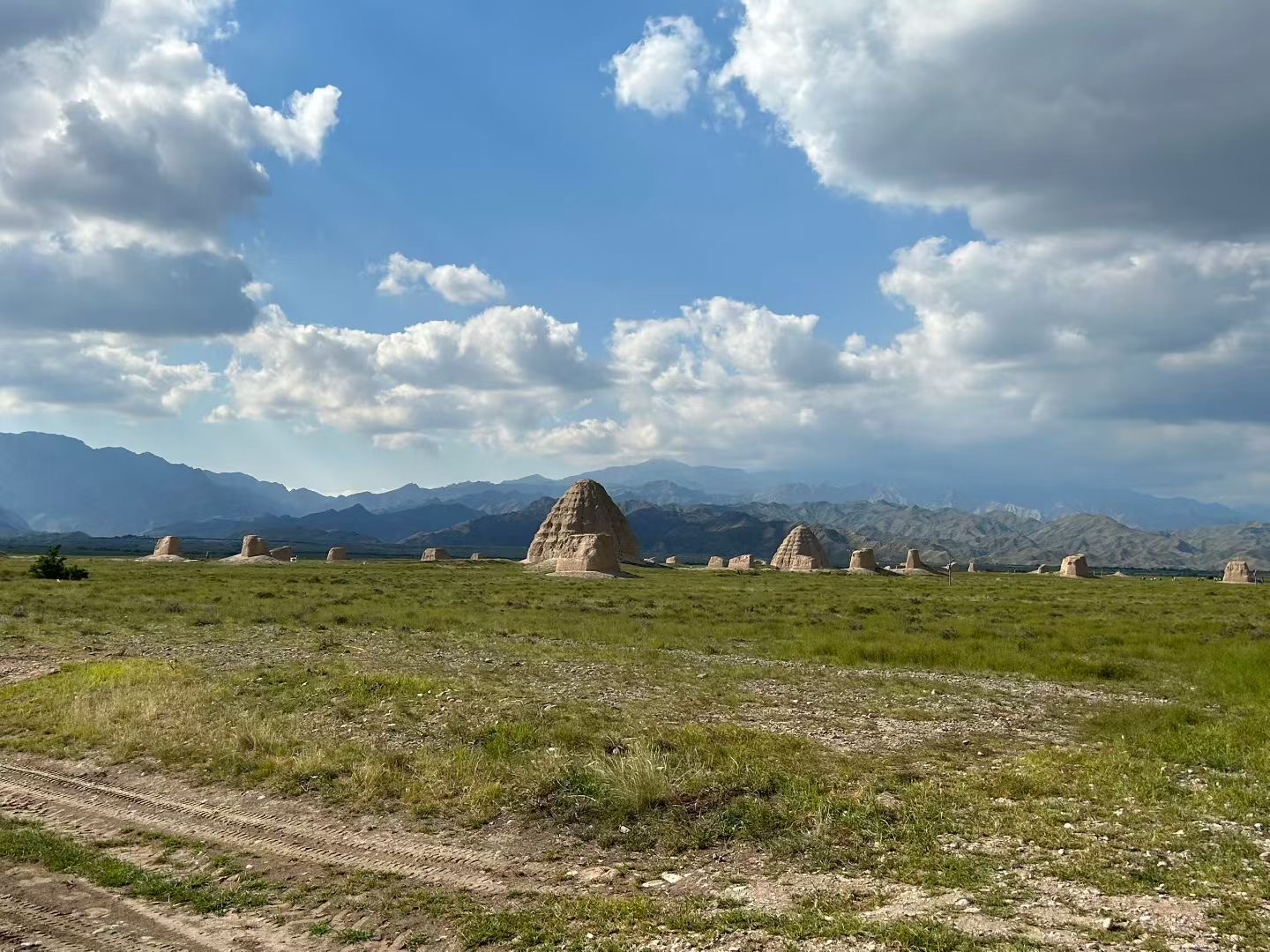
I study Buddhism in the Tangut state (Xi Xia in Chinese), focusing on how it developed its own distinctive character by selectively adopting and excluding elements from surrounding Buddhist traditions, using Tangut Buddhist texts as my main sources.
I have been fascinated by history since childhood, especially things unearthed from the ground. I attended a mission school, which led me to develop an interest in religion and belief. My interest in the Tangut state began when I read Dunhuang by Yasushi Inoue (a Japanese historical novel) in high school. As I learned more about the Mogao Caves and the Buddhist manuscripts that had once been buried and later rediscovered, I became increasingly fascinated and wanted to study them myself.
The Tangut state flourished between the 11th and 13th centuries in what is now northwestern China. It is often described as a little-known and still not fully understood kingdom, partly because of the lack of comprehensive historical records and the difficulty of the Tangut script. Most of what survives are actually Buddhist texts, yet they have rarely been used for historical research. I approach them as texts that the Tangut people actively selected from surrounding Buddhist traditions, and by comparing them with Tibetan and Chinese texts, I explore how they are connected and how the Tangut people saw the wider Buddhist traditions across eastern Eurasia and their place within them.
The Tangut state may at first seem to have little in common with Japan, but the two share a number of interesting similarities. Both were part of the broader Sinosphere (the Chinese-character cultural sphere), adopted elements of Tang culture, and later developed their own scripts, written cultures, and identities. In both Japanese and Tangut Buddhism, distinctive forms developed through engagement with Chinese traditions.
From this perspective, by comparing the Tangut state at the western edge of the Sinosphere with Japan at its eastern edge, I hope to present the Tangut state as something more familiar and relatable.