Introducing New Staff Vol. 95 : Ryusei HOMMA
2026/04/22
Another approach to the field: Explorations in Islamic thought as area studies
HOMMA, Ryusei
(JSPS Research Fellowship, April 2026)
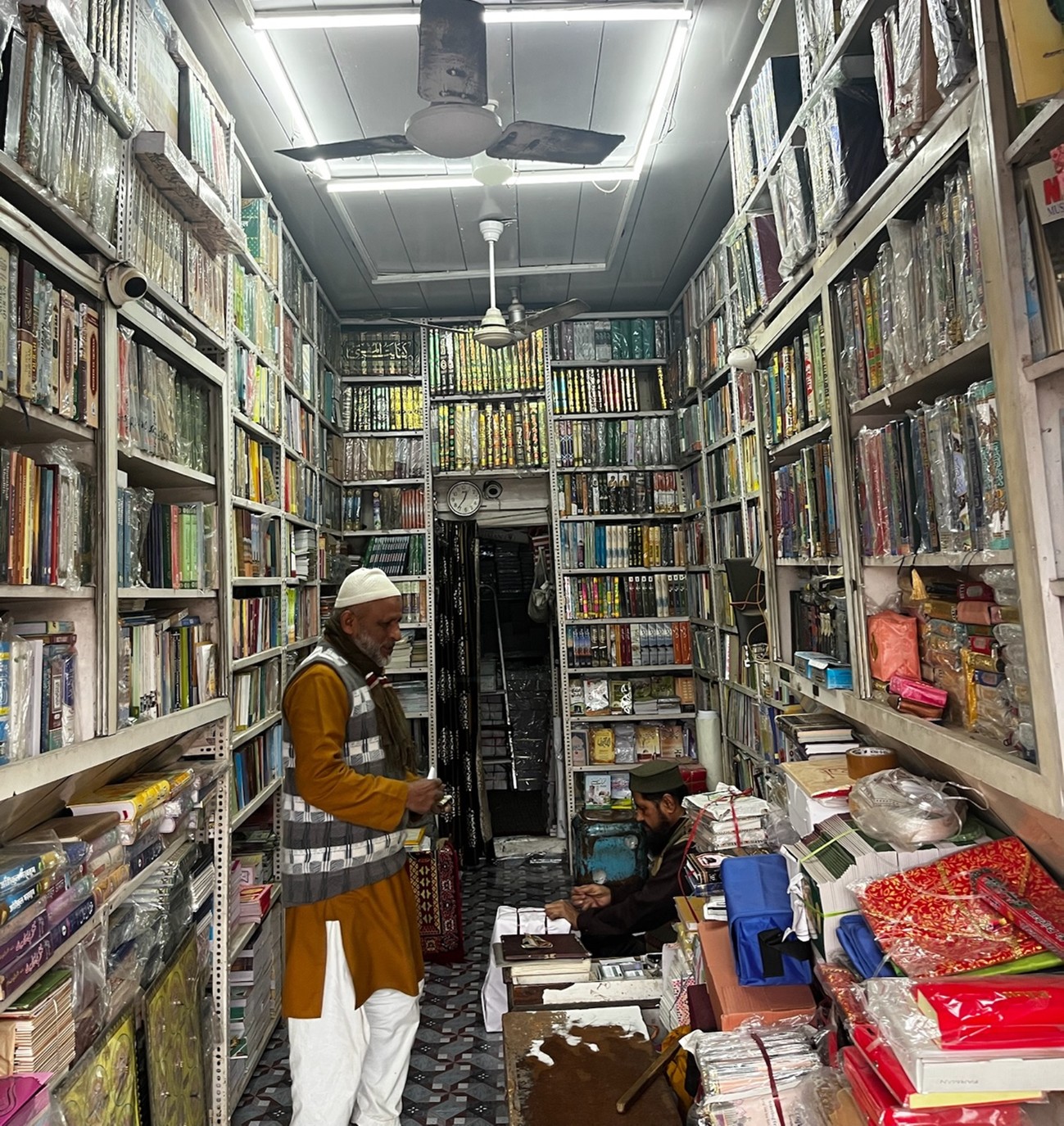
I have been researching Islamic thought in South Asia by analyzing classical texts written in local languages. Having earned my Ph.D. in Area Studies from the Graduate School of Asian and African Area Studies at Kyoto University, I am now officially recognized as a scholar of South Asian Area Studies.
In Area studies, we explore the politics, economy, religion, culture, and history of a specific region in interdisciplinary ways, aiming to elucidate both its unique characteristics and its global connections. While extensive knowledge of the region is crucial for conducting area studies, acquiring such knowledge requires long-term fieldwork. In other words, those working in area studies must possess the physical and mental stamina to remain in a foreign country for an extended period and conduct research while adapting to local customs and culture.
However, given these characteristics of area studies, I cannot say with certainty that I am suited to be a researcher in area studies. This is because I lack both the physical and mental stamina required to conduct long-term fieldwork.
My connection to South Asia dates back to my undergraduate years. I studied Urdu at Tokyo University of Foreign Studies, and during my third year, I spent a year studying at a university in Varanasi, a sacred site of Hinduism. Even before studying in India, I had traveled to some cities in North India during holidays, and Varanasi was the city I liked the most. So, I decided to study in Varanasi simply because I thought it would be fun to live there. However, this decision turned out to be a huge mistake, and I realized that a short trip is completely different from a long-term student stay. I grew to feel reluctant about most of Varanasi—the “most quintessentially Indian city”—from its chaos and clamor to the troublesome locals accustomed to tourists, and the spice- and oil-drenched food within just a few months. I ended up holing up in my room, thinking only of returning to Japan. Indeed, while studying in India, I developed an interest in Indian Muslims and aspired to become a researcher, but I also realized during that time that India simply was not for me.
I wondered how I could pursue South Asian area studies without overcoming my reluctance toward India. The path I then discovered was philological studies of South Asian Islam. In area studies, reading local-language texts is also considered an effective method, alongside fieldwork. For someone like me—who wanted to avoid going to India directly as much as possible but still had an intellectual interest in the region—the philological study, which allows one to experience India indirectly through texts, was the ideal approach. The greatest appeal of studying specific thought from a philological perspective is engaging with the accumulated wisdom of great intellectuals, especially those who have passed away, through texts. However, I also believe that part of its attraction is the experience of exploring the field while maintaining a certain distance from it. For me, the philological study of Islamic thought in South Asia is a way to engage with the region in my own style.
That said, since even the materials needed for philological study cannot be obtained without going to the field, I recently visited India after almost 10 years. It was only a two-week trip, but I felt once again that a long-term stay would be difficult.