Introducing New Staff Vol.92 : Sayoko NUMATA
2026/04/13
Soy Sauce on Peremechoughts
NUMATA, Sayoko
(JSPS Research Fellowship, April 2026)
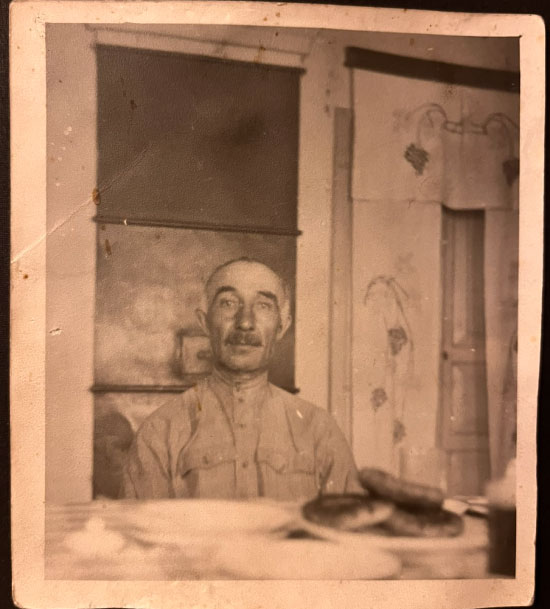
In the foreground on the right side of the photograph are peremechs, one of the most representative dishes of Tatar cuisine. This photograph, believed to have been taken in Hailar in the early 1940s, depicts the maternal grandfather of the photograph’s contributor, Mr. Edip Akış, seated at the dining table.
My research focuses on the experiences of Tatar migrants, Turkic Muslims who, following the 1917 Russian Revolution, moved from the Volga-Ural region to Manchuria, the Korean Peninsula, and Japan. I have met with the second generation born in East Asia, as well as third-generation descendants born in subsequent destinations such as Türkiye and the United States, in cities including Tokyo, Kobe, Istanbul, Ankara, San Francisco, and New York. Through interviews, I have listened to each individual’s personal experiences. Almost without exception, I was treated to tea and sweets, and it was not uncommon for us to share meals together.
The peremech introduced at the beginning is a pastry made by wrapping minced beef in dough, leaving a small opening in the centre, then either deep-frying or baking it. Soy sauce or onion broth is poured into the central opening before eating. I first tasted it in 2010 at the Tokyo home of Mr. Ramazan Safa, a second-generation Tatar migrant. I still vividly remember being deeply moved as I tasted his homemade peremech, thinking, “So this is the peremech I had heard so much about.”
In 2011, I began studying abroad at Boğaziçi University in Istanbul and, from there, conducted fieldwork in various locations over the next four years. When I visited Mr. Deyyan Safa, Ramazan’s older brother, and his wife, Ms. Rukiye Safa, in San Francisco, they told me they regularly ate Japanese food. They kindly prepared homemade sukiyaki for me, saying, “You must miss Japanese food while living in Türkiye,” and also took me to their favourite sushi restaurant. Rukiye, who was born in Kobe, even showed me how to make peremech. She shared a memory: “Whenever my mother made peremech, there was always a clattering sound. I used to wonder what it was. After I got married, I realised it was the sound of her ring hitting the rolling pin.” In this way, food also brought back personal memories.
Eating together and cooking together are acts through which people share and pass on the lives they have woven. Pouring soy sauce over peremech, a Tatar dish, is a unique way of eating among Tatar migrants who once lived in East Asia. Having a favourite sushi restaurant reflects a past shaped by growing up eating Japanese food in places like Tokyo and Kobe. Experiencing these foods firsthand, through my own senses, gave the narratives I heard in interviews a tangible depth.
Food cultures shaped through histories of global migration continue to be passed down to younger generations. At the Kazan Cultural and Mutual Aid Association in Ankara, a class was held to teach how to make peremech, and even today, when I travel to Türkiye, I bring sheets of nori for sushi rolls as souvenirs. Nearly a century has passed since Tatar migrants left Russia, and about seventy years since they left East Asia, yet the memories of those flavours remain alive.