Introducing New Staff Vol.90 : Kanako KONDO
2026/04/13
It All Started with “This Water Doesn’t Taste Good”
KONDO, Kanako
(JSPS Research Fellowship, April 2026)
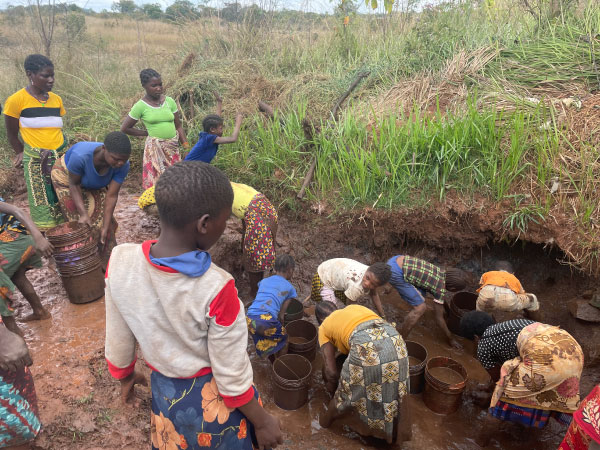
From 2016 to 2018, I worked as a member of the Japan Overseas Cooperation Volunteers (JOCV) in rural Mozambique, promoting access to safe drinking water. I was involved in a project to introduce hand pumps and to enable local people to maintain and manage these facilities themselves.
During my activities, I saw many cases in which introduced hand pumps were not properly maintained and were abandoned. When I encountered such situations, I felt frustrated, wondering why people would neglect a source of safe drinking water. One day, when I asked a resident why a hand pump had been left unused, he replied, “This water doesn’t taste good.” According to him, the water from the pump was unsuitable for making xima, a staple food made from maize flour. The reason was that the water had a high mineral content. I realized that just because water is “safe” does not mean it fits local ways of life, as in Japan, where rice does not taste good when cooked with hard water.
Until then, I had thought that safe drinking water would naturally be welcomed. I had been imposing my own assumptions without understanding residents’ perceptions of water, such as its taste and accessibility. This experience got me interested in local values and practices related to water use. After returning to Japan, I enrolled in the Graduate School of Asian and African Area Studies, Kyoto University.
During my graduate studies, I conducted fieldwork by staying for several months in a village without electricity, examining local water sources and patterns of water use. The more I learned, the more I was impressed by the local knowledge and the adaptability of local people in responding to changes in their water environment.
Narratives about water in rural Africa often emphasize poor hygiene and the burden of fetching water. While these challenges are real, such narratives are often told from the perspective of donors, overlooking how local people have long addressed various challenges in securing water through ingenuity and practice. My research aims to highlight these local perspectives.
Water is important for everyone, but its uses and values are closely tied to local culture and customs. One-size-fits-all approaches to water supply projects often fail to fit local needs. By understanding local perspectives and practices through my research, I hope to find more appropriate approaches to water supply and resource management.