Introducing New Staff Vol.88 : Qin XU
2026/02/16
Documenting Voices Resonating at the Boundaries: From Phonetic Research on Yanbian Korean in China to Public Dissemination of Minority Language Resources.
XU Qin
(Project Assistant Professor, February 2026)
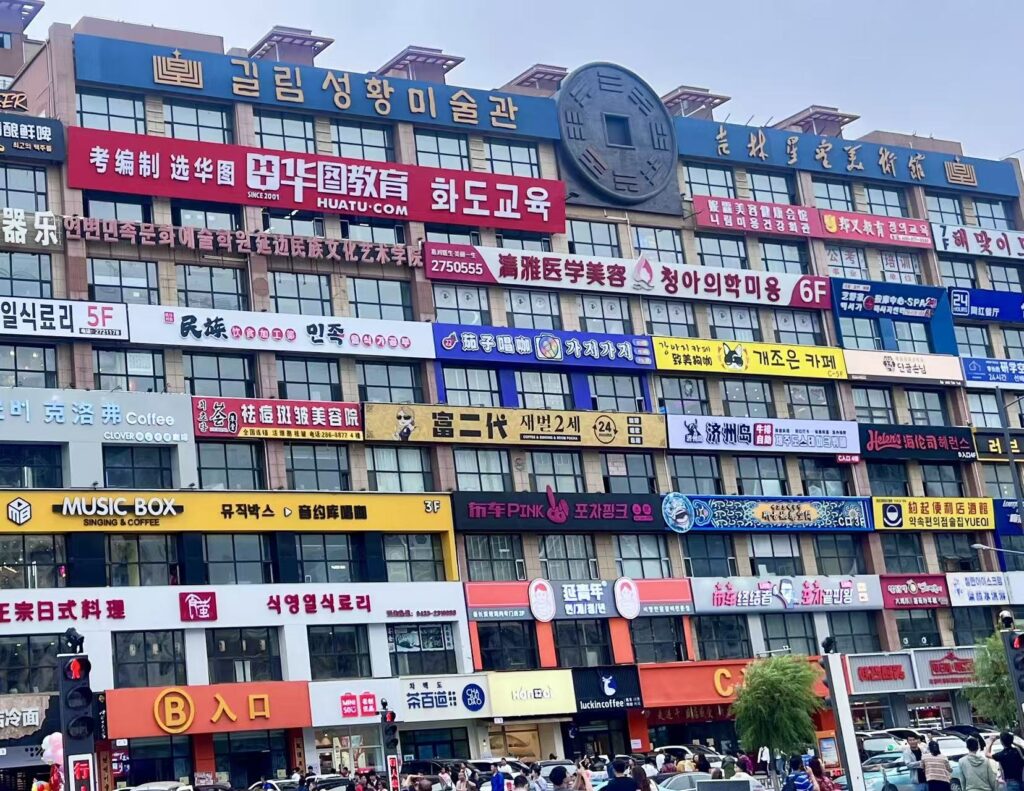
I was born in the Yanbian Korean Autonomous Prefecture in Jilin Province, China, and grew up as a member of the Korean ethnic minority, in an environment where Korean and Chinese intersected in everyday life. Korean is my mother tongue; I used Korean at home and at school, while also using Chinese in broader social contexts. This bilingual situation was entirely natural to me. From an early age, I developed a strong interest in language learning. English was my first foreign language, and I later began studying Japanese as my second foreign language. Through largely self-directed study, I developed the level of Japanese proficiency required for studying in Japan. Furthermore, I enrolled at Jilin University in China, majoring in Software Engineering; however, I gradually realized that this field did not fully suit me, and I chose Spanish as my second major. I believe that this passion for languages ultimately led me to pursue a career in linguistic research. In particular, I am deeply interested in “sound.” While it is self-evident that different languages possess distinct phonemic systems, variation can also be observed within a single language across dialects. For example, even within what is called “Korean,” pronunciation differs depending on generation and region. This awareness led me to develop a strong interest in phonetic variation and language change.
My research has focused on Yanbian Korean, employing experimental phonetic methods to describe its acoustic characteristics in a systematic manner. Although Yanbian Korean is historically continuous with dialects of the Korean Peninsula, it has developed distinctive features within Chinese society. In recent years, however, due to changes in social structure and language environment, the number of speakers has declined rapidly, and the language is increasingly endangered. I feel an urgent need to document the phonetic realities of this speech community as objective data before they may be lost.
After graduating from university, I decided to pursue graduate studies in Japan. In April 2018, I entered the Master’s Program at the Graduate School of Humanities and Sociology, the University of Tokyo. Throughout my master’s and doctoral studies, I conducted acoustic analyses of vowels and consonants in Yanbian Korean, working to clarify its phonetic system. I am currently employing auditory phonetic methods to examine perceptual differences between pronunciations produced by speakers of Yanbian Korean and those of the Seoul dialect. By examining mismatches in phonological categories within what is considered the same language, I aim to capture the dynamics of linguistic variation from multiple perspectives.
In the future, while continuing my research on Yanbian Korean, I plan to expand my focus to other minority languages in China and to engage in the collection, organization, and public dissemination of speech data. The documentation and preservation of languages whose speaker numbers are declining amid social change is an urgent task. By constructing and openly publishing a systematic speech corpus, I hope to contribute to the development of sustainable research infrastructures. At the Research Institute for Languages and Cultures of Asia and Africa, Tokyo University of Foreign Studies, I aspire to advance the organization and sharing of linguistic materials within an interdisciplinary environment and to develop research that connects the “voices” of minority languages to the future. This is the goal toward which I will continue to work. With the hope of listening carefully to the voices of languages situated at various geographical, social, and linguistic “boundaries,” I have titled this essay “Voices Resonating at the Boundaries.”